
Weeks 1–2
Pain
Calm the tendon down.
Load management, bracing, and hands-on care take the edge off the irritated tendon, starting your very first visit.
What We Treat
The stab on your elbow every time you grip. The ache that lingers long after the round or the match. It’s fixable, and it starts with a cause-first evaluation, not a guess.
Sound Familiar?
Two or more sound familiar? Keep reading.
Why It Happens
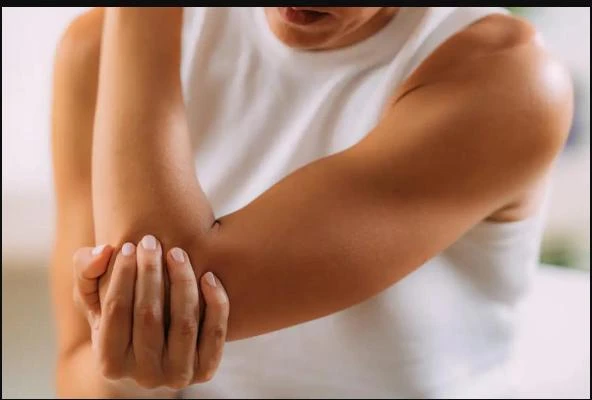
Your elbow doesn’t hurt for no reason. Tennis and golf elbow are tendinopathy: the tendons anchoring your forearm muscles to the elbow got overloaded and started to break down faster than they heal. It’s usually a mix of culprits: too much gripping too soon, weak forearm and shoulder support, poor swing or tool mechanics, and daily habits that keep reloading the same tendon before it recovers.
None of that shows up on a quick glance. It takes a real, cause-first evaluation to sort out what’s actually overloading the tendon. That’s why rest, a brace, or a generic stretch sheet so often falls short: they treat the symptom, not the source. Find the real cause, and the fix gets obvious.
The Honest Truth
Nobody regrets starting too early. Every week, someone in our clinic says they regret waiting.
How We Fix It
Every plan has an endpoint. Here’s what the four phases look like for tennis and golf elbow.
Weeks 1–2
Pain
Load management, bracing, and hands-on care take the edge off the irritated tendon, starting your very first visit.
Weeks 2–6
Prime
Targeted mobility restores the elbow and wrist motion the pain has been guarding.
Weeks 6–10
Perform
Progressive eccentric strengthening rebuilds the tendon so your grip holds up under real load.
Weeks 10+
Prevent
Your swing, grip, and tool mechanics get tested under real load before you’re cleared to go all-in: that’s the endpoint, not just another appointment.
Andrew is extremely knowledgeable when it comes to upper extremity injuries. I know he has been doing this for a long time and can tell he knows his stuff when it comes to rehab. I would highly recommend him without reservations!
Shared by Dennis V. · Upper-extremity injury
Week 1: elbow flared with every grip and every lift
Week 9: back to full-effort swings without the ache
Questions, Answered
No. You can book directly, no referral needed. Tennis and golf elbow rarely need a scan to diagnose, and imaging seldom changes the first steps of care. We start with a cause-first evaluation to find what is overloading the tendon, and if imaging ever becomes genuinely necessary, we will help you get it. You don't have to wait on a scan to start feeling better.
Usually not. Stubborn elbow tendons that have nagged for months still respond well to the right loading plan. The sooner you start the better, but it is rarely too late to turn it around. We work one-on-one with a Certified Hand Therapist, every visit, to calm the tendon and rebuild it so it holds.
Most people feel meaningful change within a few visits. Tendons take time to rebuild, so a full plan runs through all four phases, Pain, Prime, Perform, and Prevent, typically over 8 to 12 weeks, depending on how long you've been dealing with it. Either way, you get a plan with an endpoint: you'll always know which phase you're in and what's left, not an open-ended string of appointments.
Book Your Visit
Request a time and a real person calls you back, usually within two business hours. No phone tree. No ‘someone will reach out.’ Just a plan.
5.0 · 19 Google reviews
Typical response: under 2 business hours
Step 1 of 5
That’s the hard part done. We’ll call during business hours to lock in your time. Most people are on the schedule same week.
Visit Us